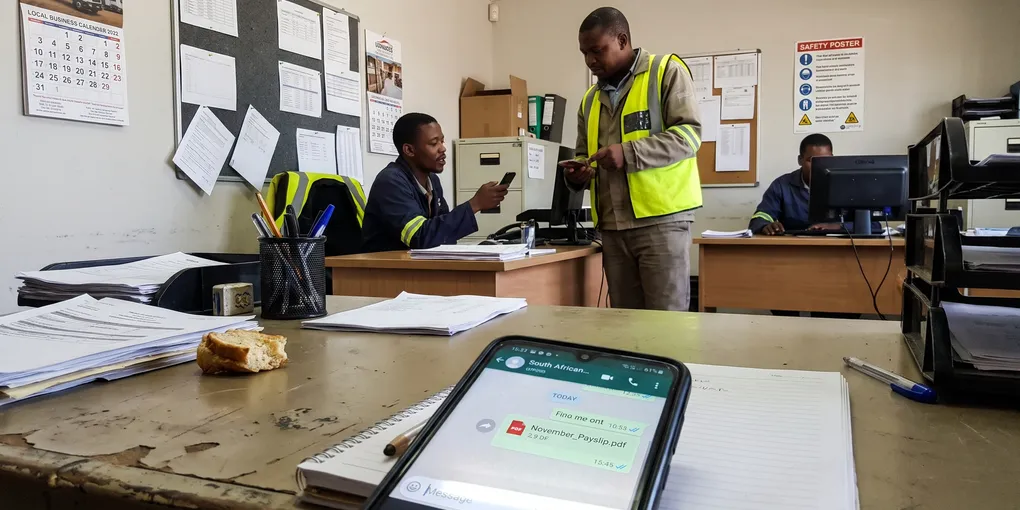
The WhatsApp Payslip Trap: Why Quick Delivery Might Be Violating POPIA
If you manage a growing team in South Africa, especially one with field staff, drivers, or deskless workers who don’t spend their day sitting in front of a corporate email inbox, getting monthly payslips to your employees can feel like a constant logistical headache.
Naturally, many managers default to the most convenient tool available: WhatsApp.
It’s fast, everyone has it installed, and it delivers instantly. You export a PDF from your payroll system, attach it to a WhatsApp message or blast it to a group, and check the task off your list.
It feels efficient. But behind that convenience lies a massive legal and operational liability: you may be actively violating the Protection of Personal Information Act (POPIA).
What Happens When a Payslip Hits WhatsApp?
A payslip is not a generic work schedule or an end-of-day announcement. Under POPIA, it contains some of the most sensitive personal data an employer can process:
- Full Legal Names and Identity Numbers
- Residential Addresses and Tax Numbers
- Banking Details and Account Numbers
- Detailed Salary, Bonus, and Deduction Breakdowns
When you distribute this information over commercial messaging platforms, several hidden compliance risks emerge immediately:
1. Zero Access Control and Document Encryption
Once a payslip PDF is sent via a regular messaging app, you completely lose control over where that file goes. It is automatically saved to the device’s local media folder, synced to unencrypted cloud backups (like personal Google Drive or iCloud accounts), and can be forwarded to any external contact with a single tap. If an employee loses their phone or shares a device at home, their private financial records are exposed.
2. The Group Chat Nightmare
In fast-paced operational environments, payslips or earnings summaries occasionally get posted to team group chats by accident. The moment a document containing Employee A’s ID number and salary is visible to Employee B, a formal POPIA data breach has occurred.
3. Lack of an Audit Trail
If an employee claims they never received their payslip, or if an auditor asks for proof of secure data delivery, a chat history full of green tick marks doesn’t cut it. POPIA requires employers to maintain reasonable technical and organizational measures to safeguard personal data. Unregulated messaging threads lack verifiable access logs, permission management, and secure distribution records.
The Risk: Regulatory Fines and Loss of Employee Trust
Section 19 of POPIA explicitly mandates that personal data must be protected against unauthorized access, loss, or damage. Failing to secure sensitive records like payroll documents exposes your business to severe consequences:
- Information Regulator Interventions: Fines for non-compliance can reach up to R10 million, along with administrative enforcement notices or civil litigation from affected individuals.
- Erosion of Internal Trust: Salary privacy is a deeply personal matter. When employees realize their confidential information is circulating on informal channels, morale takes a direct hit.
How to Fix It: Secure Delivery Without Adding Admin Friction
Protecting your business doesn’t mean forcing deskless employees to remember complex passwords or navigate bulky corporate portals they will never use.
Here is how forward-thinking SMBs are modernizing their document distribution:
- Separate Communications from Confidential Delivery: Use messaging channels strictly for operational announcements and notifications, never for storing or sending raw personal documents containing PII (Personally Identifiable Information).
- Centralize Document Storage: Ensure employee files are hosted in a secure, role-restricted repository located in compliance-friendly server infrastructure.
- Implement Self-Service Access: Give employees a single, verified entry point where they can view and download their payslips on demand without exposing data to third-party backup servers or shared chat groups.
Moving Beyond Quick Fixes
As your business grows, using short-term workarounds for sensitive HR tasks creates cumulative risk. Upgrading your document delivery to a secure, POPIA-compliant setup protects your company from regulatory fallout while giving your workforce the privacy and professionalism they deserve.