5 Administrative Bottlenecks That Quietly Drain SMB Profitability
When a South African small or medium-sized business (SMB) hits a rough patch financially, leadership instinctively scrutinises the obvious levers: sales pipelines, supplier pricing, marketing spend, and gross margins.
Rarely does anyone look at the quiet, everyday friction happening inside internal operations.
Yet across growing businesses, especially those managing hybrid, remote, or field-based teams, disconnected administrative workflows act like a slow leak in a tyre. On their own, a five-minute email query here or a missing paper receipt there feels harmless. Multiplied across 30, 50, or 100 employees every single month, those micro-delays quietly erode billable hours, introduce compliance risks, and drain profitability.
Here are five administrative bottlenecks that cost growing SMBs far more than they realise, and how unifying your operations eliminates the drag.
1. Spreadsheet-Driven Leave Management
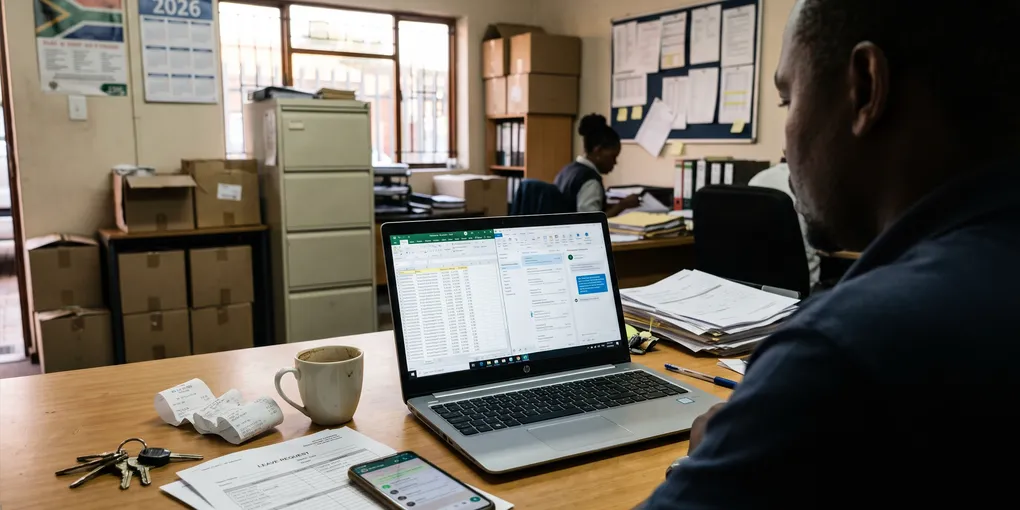
When leave requests live inside scattered email threads, paper slips, and a manually updated Excel file, every single request triggers a chain of low-value admin. Staff message HR to check their balances, line managers approve requests without copying payroll, and someone spends hours at month-end cross-referencing sick notes against public holidays.
The Profitability Drain: Beyond the wasted hours of manual reconciliation, broken formulas or unlogged leave days frequently result in inflated leave balances. When an employee resigns, the business ends up paying out thousands of Rands in unrecorded statutory leave liabilities under the BCEA.
2. Shoebox and WhatsApp Expense Claims
For field technicians, drivers, and sales reps, out-of-pocket expenses—fuel top-ups, client lunches, emergency hardware parts, or toll fees—happen constantly. When claims rely on crumpled till slips handed in at month-end, photos sent via personal WhatsApp chats, or complex Excel templates, both employees and finance teams suffer.
The Profitability Drain: Lost thermal receipts mean missed VAT input claims, delayed reimbursements frustrate frontline staff, and finance teams waste days chasing missing descriptions and manager sign-offs before closing the monthly books.
3. Unverified Hardware & Asset Allocation
Issuing laptops, mobile phones, fuel cards, or specialist site gear without a centralised tracking system creates an immediate blind spot. When equipment is logged in a static spreadsheet, or worse, in a manager’s head, nobody has real-time visibility into what is sitting in storage versus what is out in the field.
The Profitability Drain: Companies regularly double-buy expensive equipment simply because they cannot verify if a spare unit is available. Worse, during hectic employee offboarding, unreturned laptops and devices slip through the cracks, forcing the business to quietly write off tens of thousands of Rands in lost capital.
4. Fragile, Non-Compliant Document Distribution
Getting monthly payslips, updated employment contracts, or IRP5 certificates to staff who do not have corporate email addresses is a major headache for local SMBs. Out of convenience, many administrators default to sending sensitive PDFs via standard WhatsApp messages or unencrypted personal email accounts.
The Profitability Drain: Aside from the manual effort of sending dozens of files individually every month, distributing confidential personal and banking data over informal channels exposes the company to serious POPIA compliance risks, and leaves HR with zero verifiable audit trail if an employee claims they never received a document.
5. Siloed Frontline Communications
When head office relies on email blasts or physical breakroom noticeboards to share shift changes, safety updates, or policy revisions, deskless workers are left out of the loop. Attempting to fix this with massive, unmanaged WhatsApp groups only creates new noise, burying critical operational instructions under off-topic chatter.
The Profitability Drain: Miscommunication directly impacts the bottom line through missed shifts, preventable operational errors, duplicated work, and higher staff turnover caused by frontline disconnection.
The Fix: Unifying Everyday Operations
The common thread across all five bottlenecks isn’t a lack of effort from your admin or HR team, it’s tool fragmentation. When leave sits in Excel, expenses sit in email, assets sit in a notebook, and documents sit in WhatsApp, your managers become human middleware, manually copying data from one silo to another.
Modern SMBs are reclaiming their margins by consolidating these core people workflows into a single, lightweight hub:
- One Employee Record: Linking leave balances, assigned hardware, expense claims, and confidential documents to a single digital profile eliminates duplicate data entry and makes onboarding or offboarding effortless.
- Mobile-First Self-Service: Giving staff a simple, low-data way to check leave balances, snap photos of receipts on the spot, download payslips securely, and receive official company broadcasts removes admin bottlenecks at the source.
- Clean Month-End Handovers: When approvals and logs happen automatically throughout the month, finance and payroll close the books in a fraction of the time, with accurate, audit-ready records.
Stop Paying the Admin Tax
Growth shouldn’t mean drowning in paperwork. By replacing disconnected spreadsheets and informal workarounds with one unified operational workflow, you free up your leadership team to focus on customers, delivery, and profitable growth.